


Узеир Гаджибейли — человек, примиривший Восток и Запад в одной партитуре
Поставленная в Баку в 1908 году «Лейли и Меджнун» стала первой оперой на мусульманском Востоке. Её автор написал и теорию мугама.
Народные инструменты и история восточной музыки
Ethnic music preserves the history, traditions, and cultural identity of peoples through sound. Discover the place of this rich heritage in the world of music, from traditional instruments to contemporary film scores.
Sometimes, just a few musical fragments are enough to sense which culture a piece of music belongs to. The gentle, melancholic sound of the balaban, the rich melodic possibilities of the tar, the breath-like timbre of the ney, or the distinctive sound of the saz can evoke a particular geographical region. This characteristic of music reveals how closely it is connected to the culture from which it originates.
What Is Ethnic Music?
Ethnic music is a broad concept encompassing musical expressions associated with the history, traditions, and way of life of a particular nation or ethnic community. Its development is influenced by geographical surroundings, language, beliefs, rituals, and people's everyday lives.
Ethnic music is not limited to folk songs and folklore. Professional music rooted in oral traditions, ceremonial music, instrumental performance, and contemporary compositions inspired by traditional musical elements can also be considered within this broader concept.
Azerbaijani mugham, Anatolian ashik music, the Iranian dastgah tradition, the Indian raga system, and the musical heritage of Central Asian peoples are examples of different approaches to musical expression. Each is based on performance traditions and aesthetic principles that have developed over centuries. One of the most fascinating ways to discover a nation's music is to listen to its traditional instruments.
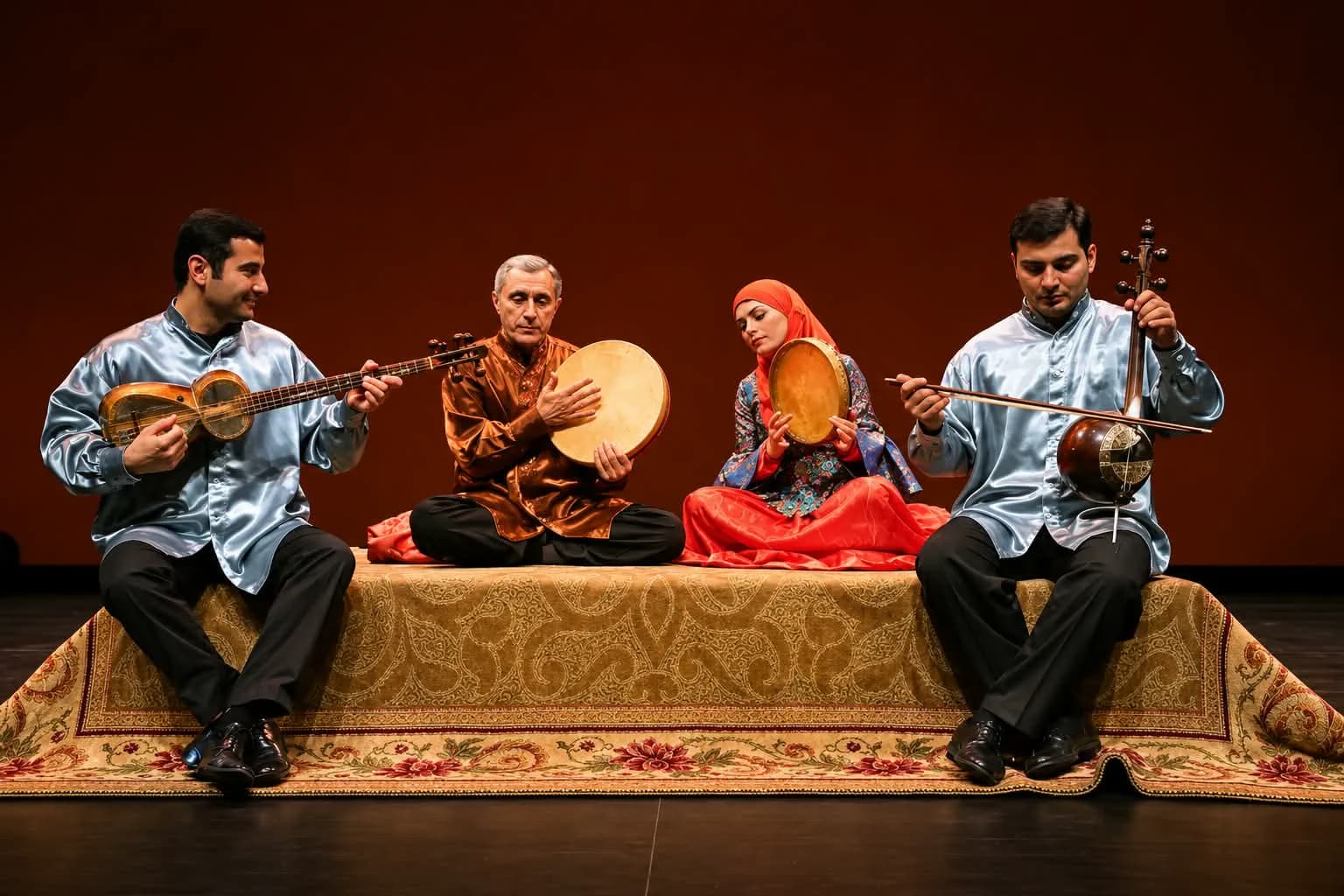
The tar, kamancha, balaban, and saz hold a special place in Azerbaijani music, as do the bağlama and ney in Türkiye, the santur and setar in Iran, the dombra in Kazakhstan, and the sitar and tabla in India.
What distinguishes these instruments is not only their appearance and construction but also their timbre and expressive capabilities. The soft sound of the balaban can evoke lyrical and nostalgic moods, the versatility of the tar can convey dynamic and dramatic imagery, while the timbre of the ney can create a calm and contemplative atmosphere.
The cultural significance of traditional musical instruments is also recognised internationally. Azerbaijani mugham was inscribed on UNESCO's Representative List of the Intangible Cultural Heritage of Humanity in 2008, the art of Azerbaijani ashiks in 2009, and the craftsmanship and performance art of the tar in 2012. In 2017, the shared kamancha craftsmanship and performance traditions of Azerbaijan and Iran were added to the list, followed in 2023 by the shared balaban/mey craftsmanship and performance traditions of Azerbaijan and Türkiye.
Even when traditional instruments are replaced by others, it is still possible to recognise the melodic characteristics of a nation's music. This is because mode, rhythm, and performance style also play an important role in defining its cultural identity. Azerbaijani mugham, Turkish makam, Iranian dastgah, and Indian raga are musical systems based on different principles. In these traditions, melodic development, relationships between notes, and improvisation are particularly important.
The world's musical traditions are equally diverse in terms of rhythm. The asymmetrical rhythmic patterns found in Balkan and Anatolian music, the multilayered rhythms of many African musical traditions, and the Indian tala system are examples of this diversity. For contemporary composers and music producers, this melodic and rhythmic richness offers opportunities to create distinctive sounds. Traditional melodies can be combined with electronic music, jazz, symphonic music, and other genres, forming the foundation of new compositions.
The integration of traditional musical elements into contemporary genres is not a new trend. Successful examples of this approach can be found in Azerbaijani music history as early as the twentieth century. Vagif Mustafazadeh's fusion of mugham and jazz established a new direction in the development of Azerbaijani jazz. In Fikret Amirov's symphonic mughams Shur and Kurd Ovshari, traditional musical expression was presented through the expressive resources of a symphony orchestra. One of the most interesting international examples of this approach is the Silkroad Ensemble, founded in 2000 by renowned cellist Yo-Yo Ma. Bringing together musicians from different countries, the ensemble presents new works inspired by diverse performance traditions. Its album Sing Me Home received a Grammy Award in 2017. Projects such as these demonstrate how traditional music can be presented on the contemporary global stage without losing its cultural roots.
Today, the applications of ethnic music extend far beyond concert halls and festivals. Traditional instruments can also be heard in film scores, advertising music, video games, documentaries, and tourism videos. For example, the Silkroad Ensemble created music inspired by Vietnamese and American musical traditions for the 2017 documentary series The Vietnam War. In film and video game music, traditional instruments can be used to convey a particular geographical setting, historical period, or character's personality. Sometimes, a brief instrumental passage can communicate the atmosphere of a scene more effectively than a lengthy dialogue.
Digital music libraries and music licensing platforms provide opportunities to connect composers and their works with filmmakers, producers, and content creators working across different countries.
In today's music landscape, a nation's traditional melody can become part of a film soundtrack produced in another country, a contemporary instrumental composition, or a digital creative project. This does not require the music to lose its cultural identity.
One of Musical.az's primary objectives is to bring compositions inspired by the musical traditions of Azerbaijan, the Caucasus, Anatolia, and Central Asia to international creative projects.
In this way, traditional musical heritage continues to live across generations while finding its place in new creative fields.
Поставленная в Баку в 1908 году «Лейли и Меджнун» стала первой оперой на мусульманском Востоке. Её автор написал и теорию мугама.
Друг Узеира Гаджибейли на всю жизнь и второй основатель азербайджанской классической музыки. Его имя носит Государственная филармония.
Старший брат Узеира и отец Ниязи — автор оперы «Ашик Гариб» и один из основателей Театра музыкальной комедии.